
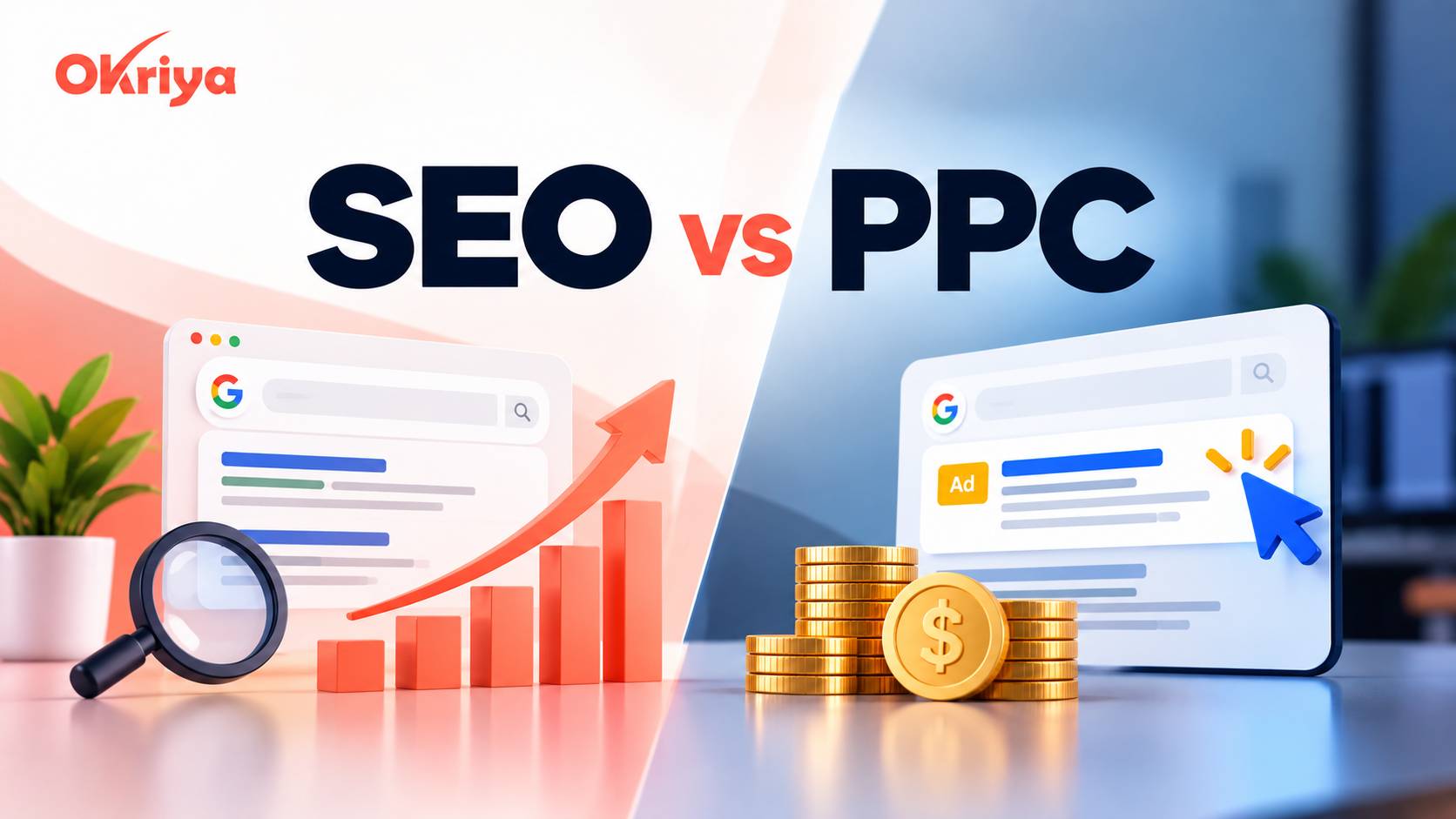
Choosing between SEO vs PPC is one of the most common digital marketing decisions for businesses that want more traffic, leads, and sales. Both can put your brand in front of potential customers, but they work in very different ways.
SEO focuses on earning visibility in organic search results, while PPC gives you immediate placement through paid advertising. The real SEO vs PPC decision depends on your budget, timeline, competition, and growth goals.
This guide explains PPC vs SEO in simple terms, compares their strengths, and looks at seo vs ppc roi so you can decide where each channel fits in your marketing plan.
What Is SEO?
Search engine optimization, or SEO, is the process of improving a website so it can rank higher in unpaid search results. A professional SEO service typically includes keyword research, content creation, technical SEO, on-page optimization, internal linking, and link building.
In the SEO vs PPC comparison, SEO is usually the slower channel at the beginning. However, strong pages can continue attracting relevant visitors long after they are published. That makes SEO useful for businesses that want sustainable search visibility rather than paying for every visit.
Main Benefits of SEO
SEO can build long-term visibility, strengthen brand credibility, and reduce dependence on paid traffic. As your website gains more useful content and authority, organic traffic can grow without increasing ad spend for every click. Avoiding common SEO mistakes is also important if you want that growth to remain sustainable.
The main limitation is time. Rankings are rarely instant, and results depend on competition, website quality, content, technical performance, and consistency.
What Is PPC?
Pay-per-click advertising lets businesses pay for targeted visibility on platforms such as Google Ads, Meta Ads, or LinkedIn Ads. In search advertising, you can bid on keywords and show an ad when people search for related products or services.
For SEO vs PPC, PPC has a clear speed advantage. A properly configured campaign can start generating traffic soon after launch. You can also control targeting, budget, location, devices, schedules, and landing pages.
The downside is that paid traffic depends on continued spending. When the campaign stops, the traffic generated by that campaign normally stops as well.
SEO vs PPC ROI: How Do They Compare?
When businesses evaluate seo vs ppc roi, they should not look only at traffic volume. The better comparison includes customer acquisition cost, conversion rate, lead quality, revenue, customer lifetime value, and how long each channel continues producing results.
SEO often requires an upfront investment in content, technical improvements, and authority building. PPC usually creates a more direct relationship between budget and traffic. This means SEO vs PPC ROI can look very different in the first month compared with the first year.
SEO vs PPC: Short-Term and Long-Term Results
In the short term, PPC vs SEO usually favors PPC for speed. A business launching a new service, seasonal offer, or limited campaign can use paid ads to reach searchers immediately.
Over a longer period, SEO vs PPC may shift toward organic search because a well-ranked page can continue generating clicks without a separate charge for every visitor. That does not make SEO free, but it can reduce the average cost of acquiring traffic over time.
SEO vs PPC: Quick Comparison
| Factor | SEO | PPC |
|---|---|---|
| Speed | Usually takes time to build | Can generate traffic quickly |
| Traffic Cost | No direct cost per organic click | Pay for clicks or impressions |
| Long-Term Value | Can compound over time | Depends on continued budget |
| Targeting | Based mainly on search intent and relevance | Detailed audience and campaign targeting |
| Testing | Slower to validate | Fast for testing keywords and offers |
| Control | Less direct control over rankings | High control over budget, bids, and targeting |
| Best Use | Sustainable visibility and content growth | Fast traffic, launches, promotions, and testing |
This SEO vs PPC table shows why neither channel is automatically better in every situation. The right option depends on what your business needs right now and what you want to build for the future.
When Should You Choose SEO?
SEO makes sense when your goal is to build consistent organic visibility around services, products, educational content, or high-intent searches.
If customers research before contacting a business, SEO can help you appear throughout that research journey. Service businesses, B2B companies, SaaS brands, local businesses, and e-commerce websites can all benefit from useful pages that answer real search intent.
In an SEO vs PPC strategy, SEO is especially valuable when you want to reduce long-term dependence on advertising and create content assets that can keep working over time.
When Should You Choose PPC?
PPC is useful when speed matters. New product launches, event promotions, seasonal campaigns, lead-generation offers, and market testing often benefit from immediate paid visibility.
PPC also gives businesses faster data. You can test keywords, headlines, landing pages, offers, and audience segments, then use the results to improve future campaigns.
Looking at PPC vs SEO from this perspective, PPC is often useful for quick validation, while SEO is better suited to building durable organic visibility.
How SEO and PPC Can Work Together
For many businesses, the strongest SEO vs PPC strategy is not choosing only one channel. A broader digital marketing strategy can combine PPC for quick traffic and conversion data with SEO for building organic rankings in the background.
Paid campaigns can reveal which keywords and offers generate qualified leads. Those insights can then guide SEO content, service pages, and landing page priorities. At the same time, strong organic rankings can reduce the pressure to rely on paid ads for every search.
This combined approach can also improve seo vs ppc roi because each channel supports a different stage of the customer journey.
How to Measure SEO vs PPC ROI
To measure seo vs ppc roi accurately, track business outcomes instead of only clicks.
For SEO, useful metrics include organic conversions, qualified leads, organic revenue, keyword visibility, landing-page performance, and assisted conversions. For PPC, track cost per click, cost per acquisition, conversion rate, return on ad spend, lead quality, and revenue.
The most useful SEO vs PPC analysis connects both channels to actual sales or qualified opportunities. If one channel brings cheaper traffic but lower-quality leads, it may not be delivering the stronger business return.
Conclusion
SEO vs PPC is not simply a choice between free traffic and paid traffic. SEO requires time, expertise, and ongoing investment, while PPC requires continuous budget and campaign management.
Choose PPC when you need speed, precise targeting, or fast testing. Choose SEO when you want to build long-term organic visibility and reduce dependence on paid acquisition.
For many businesses, combining both creates a more balanced strategy. PPC can generate immediate opportunities, while SEO builds an organic foundation that may improve efficiency over time.
FAQs
Is SEO better than PPC for long-term growth?
SEO can be more suitable for long-term organic growth because optimized pages may continue attracting visitors over time. PPC can generate traffic faster, but paid campaigns normally require ongoing budget.
Which gives faster results in PPC vs SEO?
In a PPC vs SEO comparison, PPC generally provides faster visibility because ads can start appearing soon after a campaign launches. SEO usually requires more time to build rankings and authority.
How should I calculate seo vs ppc roi?
Compare the total investment in each channel with the revenue, qualified leads, customer acquisition cost, and customer lifetime value it generates. Measuring conversions rather than traffic alone gives a more useful picture.
Can SEO and PPC be used together?
Yes. PPC can provide fast traffic and keyword data, while SEO can build long-term organic visibility. Using both can help businesses cover short-term and long-term marketing goals.