

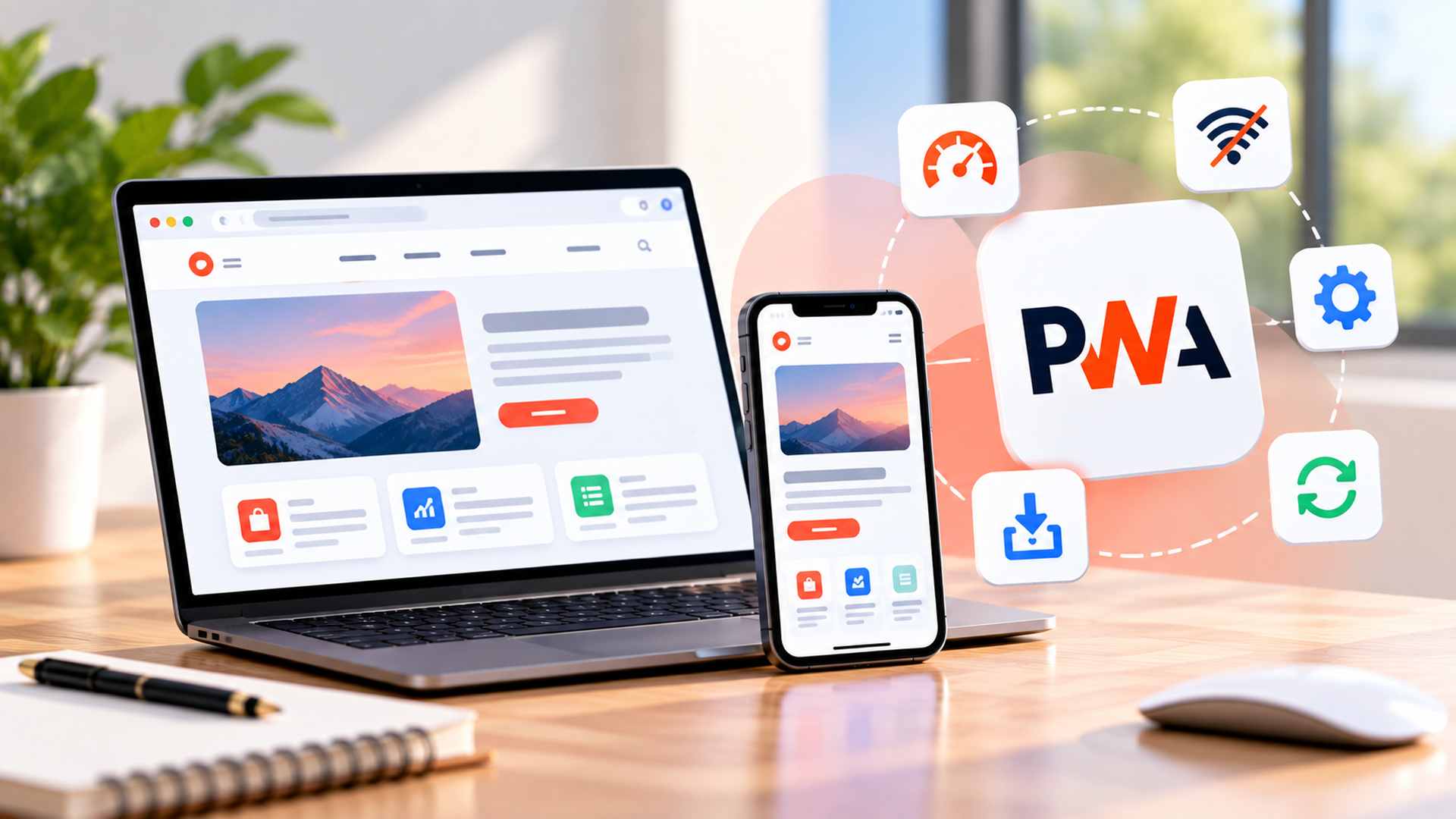
Businesses today want faster websites, better mobile experiences, and easier ways to keep customers engaged. But building separate Android and iOS apps can require significant development time, maintenance, and budget.
This is where Progressive Web Apps offer an interesting alternative. They combine the accessibility of a website with many features people normally expect from a mobile application. Users can visit them through a browser, use them on mobile devices, and in many cases add them directly to their home screen.
For businesses that want an app-like experience without immediately investing in multiple native applications, this approach can be worth considering.
What Are Progressive Web Apps?
Progressive Web Apps are web-based applications designed to provide a fast, responsive, and app-like user experience.
Unlike traditional mobile apps, users do not always need to visit an app store before accessing them. They can open the application through a web link and continue using it through their browser.
Depending on the browser and device, users may also be able to install the experience on their home screen.
This makes Progressive Web Apps especially useful for businesses that want to reduce friction between discovering a service and actually using it.
How Progressive Web Apps Work
At their core, Progressive Web Apps use modern web technologies to improve speed, reliability, and usability. Google’s Progressive Web App guidance provides additional information about building reliable, installable, and app-like web experiences.
Features can include:
- Home-screen installation
- Responsive mobile design
- Fast page loading
- Offline or limited-connectivity support
- Push notifications where supported
- Secure HTTPS connections
- App-like navigation
Because the experience remains web-based, businesses can update content without requiring every customer to manually download a new application version.
Benefits of Progressive Web Apps for Businesses
One major advantage of Progressive Web Apps is that businesses can serve users across multiple devices from a web-based platform.
Instead of maintaining completely separate products for desktop, Android, and iPhone users, a business can create one responsive experience that works across different screen sizes.
Other potential benefits include:
Lower Development Complexity
Developing separate native applications may require different technologies, development processes, and ongoing updates.
Progressive Web Apps can simplify this process because much of the experience can be managed through one web application.
Faster Mobile Experience
Mobile visitors expect websites to respond quickly.
A properly developed PWA can cache important resources and reduce unnecessary loading, helping users navigate more smoothly even when their internet connection is not ideal.
Easier Access
Users can reach a PWA through a normal URL.
They do not necessarily need to search an app store, wait for a large download, or complete a lengthy installation process before interacting with the business.
Search Visibility
Because Progressive Web Apps are part of the web, their pages can be discoverable through search engines when they are properly structured and indexable.
This gives businesses an advantage when they want both an app-like experience and visibility through organic search.
Progressive Web Apps vs Native Mobile Apps
Choosing between a Progressive Web App and a native app depends on what your business actually needs. A professional mobile app development approach can help businesses decide whether a PWA, native app, or cross-platform solution is the better fit.
Native applications can provide deeper access to certain device capabilities and may be better for products that rely heavily on advanced hardware integrations, complex background processes, or operating-system-specific features.
Progressive Web Apps, on the other hand, can be a practical choice when the main goal is to provide customers with a fast and convenient mobile experience.
For example, an online store may use a PWA to let customers browse products, save items, and place orders without downloading a traditional app. For growing online stores, the right eCommerce website development approach can combine fast mobile performance with scalable shopping features.
A more complex platform that depends heavily on advanced device functions may still benefit from native application development or a more customized software development solution.
Challenges of Progressive Web Apps
Although Progressive Web Apps offer several advantages, they are not the perfect solution for every project.
Some features may behave differently across browsers and operating systems. Certain advanced device integrations can also be more limited compared with native applications.
Businesses should consider:
- Required device features
- Browser compatibility
- Push notification requirements
- Offline functionality
- App store visibility
- Performance expectations
- Long-term product requirements
The best technology should always be chosen around the actual needs of users rather than simply following a development trend.
Are Progressive Web Apps Right for Your Business?
Progressive Web Apps can make sense when most of your customers already interact with your business through mobile browsers.
They can be particularly useful for:
- E-commerce websites
- Booking platforms
- Restaurants
- News and content platforms
- Customer portals
- Service businesses
- Online marketplaces
If your main objective is to make a website faster, easier to access, and more app-like, a Progressive Web Apps may provide the functionality you need without immediately creating separate native applications. If your current website is outdated or performing poorly, you may also want to review the signs your business website needs a redesign before choosing the next development approach.
However, businesses requiring extensive access to specialized mobile hardware should compare PWA and native development carefully before making a decision.
How to Get Started with Progressive Web Apps
Before developing anything, identify what customers actually need from your mobile experience.
Start by asking:
- Which features are essential?
- Does the application need offline functionality?
- Should customers receive notifications?
- What actions will users perform most often?
- Does the platform need advanced device access?
Once the requirements are clear, the development team can determine whether Progressive Web Apps provide the right technical foundation.
At Okriya, the development process starts with understanding the business objective before selecting technology. Whether the project requires a responsive website, custom web application, PWA, or native solution, the goal should be to build only the features that create real value for users.
Final Thoughts
Progressive Web Apps provide businesses with another way to deliver fast and convenient mobile experiences without relying entirely on traditional app-store distribution.
They can reduce installation friction, improve mobile usability, support web discoverability, and simplify development for certain projects.
However, choosing a PWA should always depend on your business requirements, customers, and technical needs. When those factors align, it can be a practical bridge between a traditional website and a full native mobile application.