

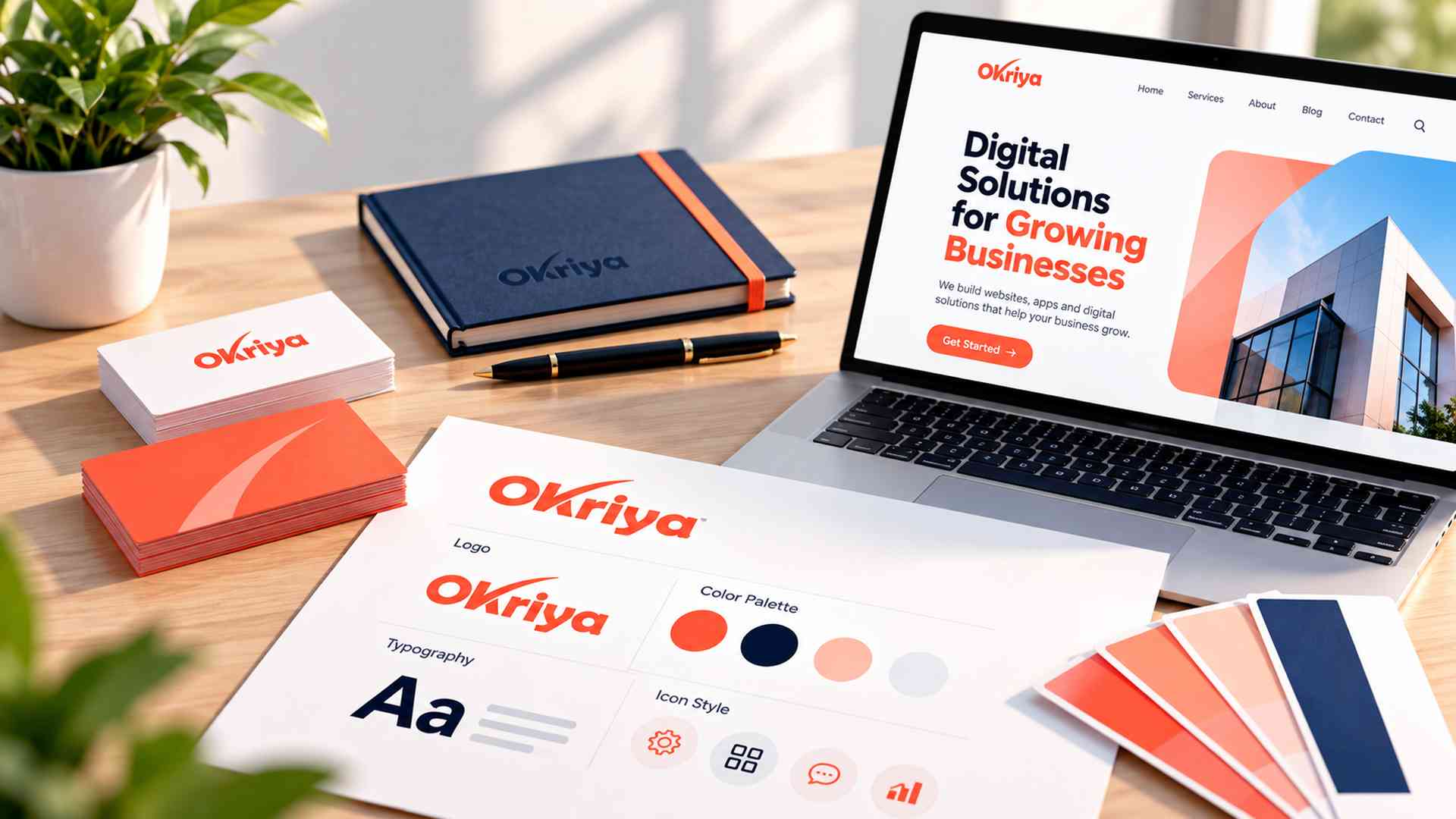
Your website looks polished. Your social posts use a different set of colors. Your sales presentation sounds like it belongs to another company. Each piece might work on its own, but together, they leave people with an unclear picture of your business.
That disconnect is what brand identity systems are designed to address. They connect the way your business looks, speaks, and presents itself, so every piece of communication feels like it comes from the same place.
A logo is part of that work, but it cannot do everything. Your business also needs practical rules that help people use its identity consistently, whether they are planning website design, creating a landing page, writing a proposal, or publishing a social post.
What Are Brand Identity Systems?
Think of brand identity systems as the shared rules and resources behind a recognizable business. They bring together your positioning, messaging, visual elements, and guidance for applying them.
A useful system answers everyday questions:
- Which logo version belongs on a dark background?
- What should a headline sound like?
- Which colors should highlight important information?
- What kind of photography represents the business?
- How should a presentation, website, or social post feel connected?
Without these answers, people make decisions individually. Over time, those small choices can pull the brand in different directions.
The goal is to give everyone a clear starting point while leaving enough flexibility for different audiences and formats.
How Is an Identity System Different From a Logo or Brand Guidelines?
A logo identifies your business. Brand guidelines explain how to present it. An identity system connects those instructions with the assets, templates, and everyday decisions needed to put them into practice.
The most useful brand identity systems bridge the gap between having a brand and actually using it.
For example, your guidelines might specify a headline font. The wider system also shows how that font works in a mobile website header, a proposal cover, and a social graphic.
That practical connection matters. A beautifully designed document has limited value if your team still has to guess how to create the next marketing asset.
What Should Brand Identity Systems Include?
You do not need hundreds of pages of documentation. You need enough direction to handle the situations your business encounters regularly.
Positioning and Core Messaging
Start with the business behind the visuals.
Define who you serve, what problem you solve, and why someone should consider your offer. Be specific enough that your message could not easily describe every competitor.
For example, “We deliver innovative solutions” offers little direction. “We build custom booking software for growing service businesses” gives your team a clearer foundation.
Document your main promise, supporting messages, and the evidence available to support your claims.
A Flexible Logo Set
Prepare logo versions for the places where they will actually appear.
These may include a primary logo, a compact version, an icon, and light or dark variations. Include clear rules for spacing, minimum size, backgrounds, and incorrect usage.
Someone preparing a presentation should be able to find the right file without recreating or stretching the logo.
Color and Typography Rules
Define primary colors, supporting colors, and their roles. Explain which combinations work for backgrounds, body text, buttons, and highlights, while maintaining appropriate color contrast for accessibility.
Typography needs similar clarity. Set a readable hierarchy for headings, paragraphs, captions, and labels.
Include practical alternatives when your preferred font is unavailable. A proposal opened on another computer should still look intentional.
Photography, Illustration, and Graphic Elements
Choose an image direction that reflects your business.
Will you use real workplace photography, product screenshots, illustrations, or a combination? Should images feel candid, technical, energetic, or calm?
Provide examples. “Use professional images” leaves too much open to interpretation. Showing suitable crops, lighting, subjects, treatments, and examples from relevant portfolio projects makes the direction easier to follow.
Voice and Tone
Your voice should remain recognizable, while your tone can adapt to the situation.
A product announcement might sound enthusiastic. A support message should prioritize clarity and reassurance. Both can still belong to the same business.
Include sample headlines, service descriptions, calls to action, and language to avoid.
Templates That Make Brand Identity Systems Usable
Templates turn instructions into working tools.
Start with the formats your team uses most often: social posts, proposals, presentations, email signatures, and website sections.
Good templates include room for different content lengths. If every longer headline breaks the layout, people will quickly abandon the template.
Why Does a Consistent Identity Matter Online?
People may discover your business through a post, find your brand in Google search results, visit your website later, and then receive a proposal. Those experiences should feel connected. This is also why managing your brand presence in Google SERPs matters as part of a consistent digital identity.
Well-built brand identity systems help maintain that connection. Familiar visuals and language make it easier for someone to recognize the business they encountered earlier.
Consistency can also support credibility by showing care and attention. However, appearance alone cannot establish trust. Your claims still need relevant examples, honest information, and reliable delivery.
For search visibility, keep the distinction clear: matching fonts and colors does not guarantee higher rankings. A coherent identity helps you communicate clearly, but it does not replace useful content or sound technical SEO.
How to Build Brand Identity Systems Step by Step
The best starting point is the material your business already uses.
1. Audit Your Current Brand Materials
Review your website, social profiles, sales documents, emails, and marketing assets side by side.
Look for inconsistent logos, conflicting descriptions, unclear messages, and layouts that no longer fit your business.
Separate what deserves to stay from what needs to change. Familiar, effective elements should not disappear simply because you are updating the system.
2. Clarify Your Audience and Offer
Practical brand identity systems begin with clear business decisions.
Identify your main audience, their priorities, and the value you can realistically provide. Then write a short positioning statement that your team can understand and use.
If the offer is unclear, new colors will not resolve the underlying problem.
3. Develop and Test the Visual Direction
Apply your proposed colors, typography, imagery, and logo rules to real examples.
Test a mobile page, a text-heavy presentation slide, a social post, and a proposal cover. Check readability, contrast, and whether the designs still feel connected across different sizes.
Revise the rules where they create unnecessary difficulty.
4. Document Decisions With Examples
Keep the guidance practical.
Show correct usage, common mistakes, and a few finished examples. Explain where to find approved assets and which templates to use.
A short guide that answers real questions is more useful than a long document filled with abstract descriptions.
5. Assign Ownership and Roll Out the System
Give one person responsibility for maintaining the assets and approving significant changes.
Update the most visible touchpoints first, then replace older materials as they come into use. Make sure employees and external contributors know where the current files live.
What Does This Look Like in Practice?
Imagine a software development company whose website emphasizes reliability, while its social posts use playful slogans and its proposals rely on outdated visuals.
The problem is not necessarily the quality of each item. It is the lack of a shared direction.
With brand identity systems in place, the company can connect those materials through a defined message, a consistent visual hierarchy, and reusable templates.
A technical case study can still look different from a recruitment post. The shared typography, image treatment, and voice make both recognizable without forcing them into identical layouts.
Common Mistakes to Avoid
Even carefully planned brand identity systems can fall short when they are difficult to use.
Watch for these problems:
- Starting with appearance alone: Establish your positioning before choosing a visual direction.
- Making every layout identical: Keep recognizable elements while allowing different content formats.
- Writing vague guidelines: Replace broad descriptions with clear examples.
- Ignoring everyday tools: Ensure assets work in the software your team actually uses.
- Leaving old files accessible: Archive outdated versions so they are not reused accidentally.
- Making unsupported claims: Pair your message with evidence your business can substantiate.
The system should make good decisions easier, not add unnecessary steps to routine work.
How Do You Know Whether It Is Working?
Assess brand identity systems through both the finished work and the process behind it.
Can your team create materials with fewer questions? Are proposals and presentations easier to assemble? Do external designers understand the direction without repeated corrections?
Review a sample of assets regularly. Check whether the message, visual hierarchy, and overall presentation remain coherent.
Customer feedback can also reveal whether people understand your offer. If confusion continues, revisit the message rather than assuming the solution is another visual redesign.
Frequently Asked Questions
Do Small Businesses Need an Identity System?
Yes, but the scope can be simple. A small business may only need a clear message, a usable logo set, color and typography rules, and a few dependable templates.
Does Every Marketing Channel Need to Look Identical?
No. A website, presentation, and social post serve different purposes. Keep the core elements recognizable while adapting the layout and tone to the context.
Can an Existing Logo Be Kept?
Yes. If the logo remains suitable and usable, you can build the surrounding system around it. Improving consistency does not always require a complete rebrand.
How Often Should the System Be Reviewed?
Review it when your audience, offer, positioning, or practical needs change. Make smaller updates when recurring problems appear, while protecting the elements people already recognize.
Build an Identity Your Team Can Use
The real value of brand identity systems is that they make consistency repeatable.
Start with a clear message. Connect it to a practical visual direction. Give your team the files, examples, and templates needed to apply it.
When those pieces work together, your business becomes easier to recognize, easier to understand, and more consistent wherever people encounter it.