
Creating content is easy, but turning that content into leads and customers requires a clear strategy. Businesses often publish blog posts, videos, social media content, and landing pages without connecting them to a specific customer journey. As a result, they may generate traffic without generating meaningful conversions.
A Content Marketing Funnel solves this problem by guiding potential customers from their first interaction with a brand to the point where they are ready to take action. Instead of treating every visitor the same way, the funnel delivers different types of content based on where someone is in the buying journey.
A well-planned Content Marketing Funnel can help businesses attract the right audience, build trust, answer important questions, generate qualified leads, and maintain relationships with existing customers.
What Is a Content Marketing Funnel?
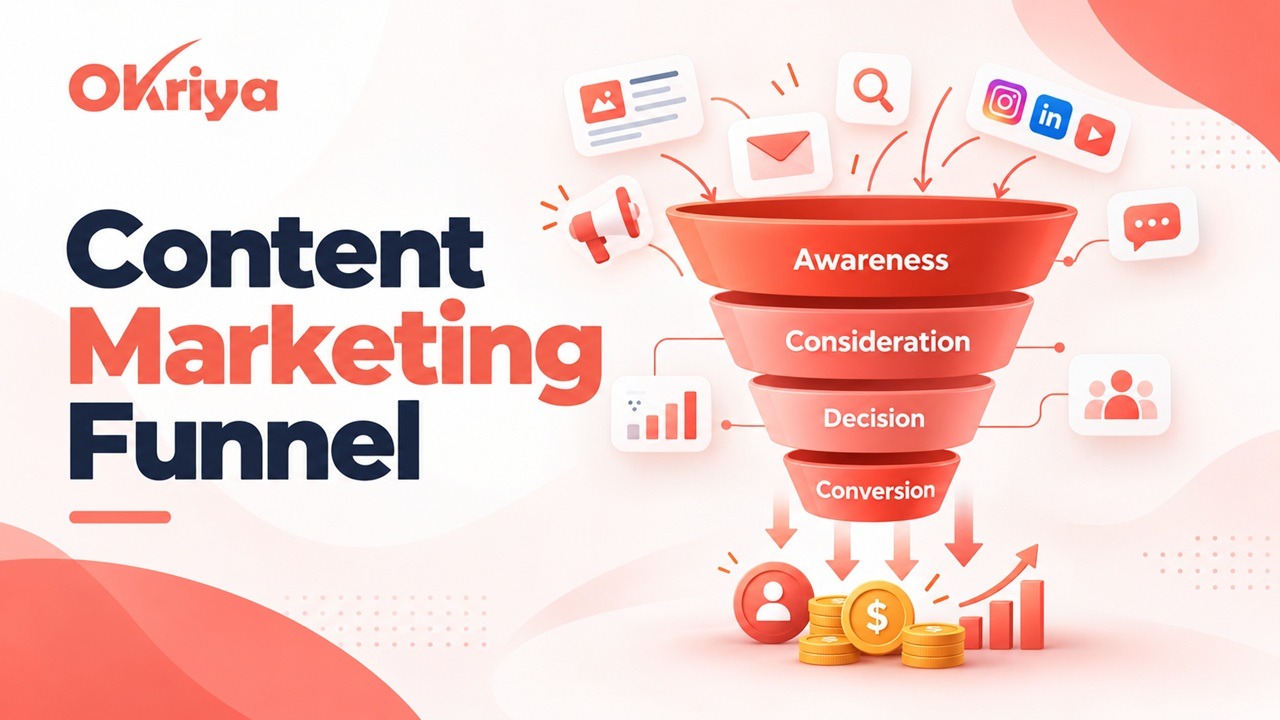
A Content Marketing Funnel is a structured marketing approach that uses different types of content to move potential customers through the stages of awareness, consideration, decision, and retention.
People rarely discover a company and immediately make a purchase. Before choosing a product or service, they may search for information, compare different options, read reviews, explore pricing, and evaluate whether they can trust the business.
Content supports each part of this journey.
For example:
- Blog posts can attract new visitors.
- Guides can educate potential customers.
- Comparison articles can help people evaluate options.
- Case studies can build trust.
- Service pages can support buying decisions.
- Email content can encourage repeat engagement.
The purpose of a Content Marketing Funnel is to make sure every piece of content has a clear role in moving users toward the next logical step.
Content Marketing Sales Funnel: Understanding the Main Stages
A Content Marketing Sales Funnel can usually be divided into four main stages: awareness, consideration, decision, and retention.
Each stage represents a different level of customer intent. Someone discovering a problem needs different information from someone who is already comparing service providers.
Understanding these stages helps businesses create more relevant content and avoid pushing a sales message too early.
Content Marketing Funnel: Awareness Stage
The awareness stage is where people first discover your brand, topic, product, or service.
At this point, users are usually searching for information rather than looking for a company to hire immediately. Your goal should be to answer useful questions and introduce your expertise naturally.
Awareness content may include:
- Blog articles
- How-to guides
- Educational videos
- Infographics
- Checklists
- Social media posts
- Industry tips
For example, a digital marketing agency might publish an article about increasing website traffic. A well-planned digital marketing strategy can connect content, SEO, paid campaigns, social media, and analytics across different stages of the customer journey. The reader may not be ready to purchase SEO services yet, but useful information can create the first connection with the brand.
The awareness stage of a Content Marketing Funnel should focus on helping before selling.
Content Marketing Sales Funnel: Consideration Stage
During the consideration stage, potential customers already understand their problem and start exploring possible solutions.
This is where a Content Marketing Sales Funnel needs more detailed and persuasive information.
Useful consideration-stage content includes:
- Detailed guides
- Comparison articles
- Case studies
- Webinars
- Email newsletters
- Service explanations
- Downloadable resources
At this stage, content should help users understand their options and determine which solution best matches their needs.
Strong internal links are also important. A useful blog article should naturally guide interested readers toward relevant service pages, case studies, or other supporting resources.
Content Marketing Funnel: Decision Stage
The decision stage is where potential customers are closer to taking action.
They may already know your company and understand your services but still need a final reason to trust your business.
Effective decision-stage content can include:
- Service pages
- Product pages
- Pricing information
- Testimonials
- Case studies
- Client success stories
- Portfolio pages
- FAQs
- Free consultations
- Product demonstrations
At this point, your Content Marketing Funnel should remove uncertainty and make the next action easy.
Clear calls to action may include:
- Request a Quote
- Book a Consultation
- Contact Our Team
- Get a Free Audit
- Start Your Project
The goal is not to add unnecessary pressure. It is to provide enough information and confidence for users who are already considering your solution.
Content Marketing Funnel: Retention Stage
A customer journey should not end immediately after a conversion.
The retention stage focuses on maintaining the relationship with existing customers and encouraging repeat business, loyalty, and referrals.
Retention content may include:
- Email newsletters
- Product tutorials
- Customer guides
- New feature announcements
- Educational resources
- Exclusive offers
- Customer success stories
Including retention in your Content Marketing Funnel helps create long-term customer relationships instead of focusing only on acquiring new leads.
Content Marketing Funnels: Match Content With Search Intent
Successful Content Marketing Funnels should be built around what people actually want when they search.
Not every keyword represents the same level of buying intent.
For example:
Someone searching for “what is content marketing” is probably looking for information.
Someone searching for “content marketing vs social media marketing” may be comparing strategies.
Someone searching for “content marketing agency in Bangladesh” could be much closer to choosing a service provider.
Understanding search intent helps businesses create the right page for each type of user.
Content Marketing Funnels: Types of Search Intent
When building Content Marketing Funnels, keywords can generally be grouped into several types of intent:
- Informational Intent: Blog posts, tutorials, and educational guides
- Comparative Intent: Comparison pages, case studies, and reviews
- Commercial Intent: Service pages and solution pages
- Transactional Intent: Pricing pages, booking pages, and contact pages
Matching content with search intent makes the customer journey more relevant and reduces the chance of sending users to the wrong type of page.
How to Build a Content Marketing Funnel
Building an effective Content Marketing Funnel does not require hundreds of articles. A smaller collection of strategically connected content can often be more useful than publishing large amounts of unrelated material.
Follow these steps to create a practical funnel.
1. Understand Your Target Audience
Start by identifying what potential customers actually need.
Research their:
- Problems
- Goals
- Questions
- Buying concerns
- Search behavior
- Preferred content formats
Your content should answer real customer needs instead of being created only to target keywords.
2. Map Keywords to Funnel Stages
Different keywords belong at different stages of the customer journey.
Informational keywords usually work well for awareness content, while commercial and transactional keywords are better suited to service pages, pricing pages, or conversion-focused landing pages.
A clear keyword map prevents multiple pages from competing for the same search intent. Google’s guidance on creating helpful, people-first content can also help businesses align content with real user needs instead of creating pages only for search engines.
3. Audit Existing Content
Before creating something new, review what your website already has.
Look for:
- Outdated articles
- Missing funnel stages
- Weak internal links
- Pages without clear calls to action
- High-traffic pages with low conversions
- Multiple pages covering the same topic
Some existing content may only need updating or better internal linking instead of being completely rewritten.
4. Create Content for Every Stage
Every important piece of content should serve a specific purpose.
A simple journey could look like:
Blog Article → Detailed Guide → Service Page → Contact Form → Email Follow-Up
This creates a natural path instead of leaving visitors without a clear next step.
5. Add Relevant Calls to Action
Every call to action should match the visitor’s level of intent.
An awareness blog post may use:
Read Our Complete Guide
A consideration page may use:
View Our Services
A decision page may use:
Request a Quote
Using the same aggressive sales CTA on every page can make the customer journey feel unnatural.
Content Marketing Funnel Metrics You Should Track
A Content Marketing Funnel should be measured using metrics that reflect what users are expected to do at each stage.
Awareness Metrics
Track:
- Organic impressions
- Website visits
- Search clicks
- Social media reach
- New visitors
Consideration Metrics
Track:
- Time on page
- Repeat visits
- Email signups
- Resource downloads
- Pages viewed
Decision Metrics
Track:
- Contact form submissions
- Quote requests
- Demo bookings
- Purchases
- Conversion rate
Retention Metrics
Track:
- Repeat purchases
- Customer retention
- Email engagement
- Referrals
- Customer lifetime value
Traffic alone does not show whether your funnel is working. A smaller number of relevant visitors who become qualified leads may be more valuable than thousands of visitors with no buying intent.
Common Content Marketing Funnel Mistakes
Even a good strategy can fail when content is disconnected from the customer journey.
Some common mistakes include:
- Publishing content without a clear goal
- Focusing only on awareness
- Ignoring consideration-stage content
- Sending every visitor directly to a sales page
- Using weak or irrelevant calls to action
- Creating pages without internal links
- Tracking traffic without tracking leads
- Ignoring search intent
- Never updating old content
- Producing content without understanding the audience
Avoiding these mistakes makes your Content Marketing Funnel more focused and easier to measure.
How to Improve Content Marketing Funnels
Improving Content Marketing Funnels should be an ongoing process. Keeping up with current content marketing trends can also help businesses adapt their formats, distribution methods, search strategy, and customer journeys as audience behavior changes.
Start by identifying where potential customers stop moving through the funnel.
If a blog article receives strong traffic but few visitors move to your service pages, consider improving:
- Internal links
- Calls to action
- Supporting content
- Search intent alignment
- Page layout
If users reach a service page but rarely contact your business, review:
- Service information
- Testimonials
- Trust signals
- Portfolio examples
- Pricing clarity
- Contact process
Small improvements at each stage can make the overall funnel more effective.
Final Thoughts
A successful content strategy is not only about publishing more articles. It is about creating a connected journey that helps users move from discovering a brand to trusting it and eventually taking action.
A well-planned Content Marketing Funnel connects awareness, consideration, decision, and retention so that every content asset supports a specific stage of the customer journey.
Start by understanding your audience, identifying their search intent, creating useful content for every stage, adding relevant calls to action, and measuring meaningful business outcomes.
When your blogs, guides, case studies, service pages, landing pages, and email campaigns work together, Content Marketing Funnels can turn content from a simple publishing activity into a practical system for generating leads and supporting long-term business growth.