
Nowadays, almost every business in Bangladesh needs a website. No matter if you run a small shop, an online store, or a software company, your website is the face of your business. But building a website is not only about design. You need a good Content Management System (CMS) behind it.
A CMS helps you create, edit, and manage your website without any coding skills. The right CMS makes your work easy and helps your site grow with your business. The wrong one can waste your time, money, and effort.
Many business owners ask, “Which CMS is best for my company?” The answer depends on your goals, budget, and how much control you want over your website.
In this article, we will share the best CMS platforms for Bangladeshi businesses in 2025. You will learn what makes each CMS special, what type of business should use it, and how to choose the right one for you.
Let’s find out which CMS platform fits your business best.
What Makes a CMS Best for Businesses in Bangladesh
When someone starts building a website, the first big question is always the same: which CMS should I use? Most people think all platforms are the same, but they’re not. What works for one business might not work for another. A small online shop doesn’t need the same system as a large corporate website.
Easy to Use
Most business owners here don’t have technical skills, and that’s completely fine. You should be able to change text, add photos, or post a blog on your own without calling a developer every time. If a CMS feels confusing, it will only slow you down later.
Cost and Maintenance
Some platforms like WordPress or Joomla are free to start with, but you still need hosting and plugins. Others like Shopify charge a monthly fee but handle everything for you. Always think about what you’ll spend in the long run, not just during setup.
Local Support and Resources
Support also matters a lot. If something breaks, you’ll want quick help. That’s why it’s smart to use a CMS that has good local support. In Bangladesh, WordPress and Shopify have big user communities, and you can easily find agencies or freelancers to assist when needed.
Bangla Language and Local Features
Language is another key factor. Many local businesses need websites in both English and Bangla. So, make sure your CMS supports Bangla properly. If you’re running an online store, check if it works smoothly with payment gateways like bKash or SSLCommerz.
SEO and Performance
SEO and performance should never be ignored. Your CMS needs to help your website load fast and rank better on Google. Platforms like WordPress and Webflow are great for this because they give you more control over optimization.
Scalability
Finally, think about the future. Your business will grow, and your website should be ready for that. Choose a CMS that can handle more content, more traffic, and new features without breaking or becoming too expensive to manage.
When you focus on these few points, choosing a CMS becomes much easier. You don’t need the most famous platform. You just need the one that fits your business and helps you grow without stress.
Top CMS Platforms for Bangladeshi Businesses
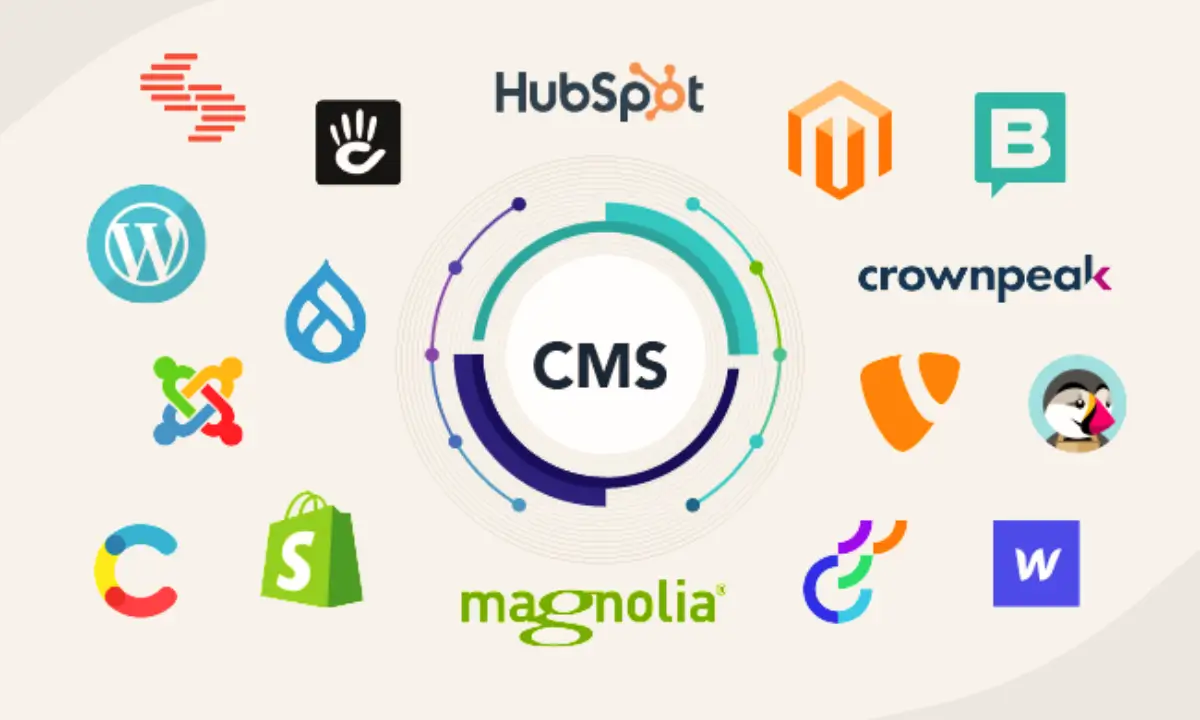
When it comes to building a business website in Bangladesh, there are many CMS platforms to choose from. Each one has its own style, features, and best use cases. Some are great for small startups, while others are made for big companies with complex websites. Let’s look at some of the most popular options that work well for Bangladeshi businesses today.
WordPress
WordPress is the most used CMS in Bangladesh and across the world. It powers millions of websites, from simple blogs to full e-commerce stores. The main reason for its popularity is flexibility. You can easily add new features using plugins and design your site with thousands of ready-made themes. For Bangladeshi entrepreneurs, WordPress is a smart choice because it’s free, easy to use, and has many local developers who can provide support. Whether you run a digital agency, a service-based company, or an online shop, WordPress can fit your needs perfectly.
Shopify
Shopify is a favorite for e-commerce businesses. It’s a hosted CMS platform that lets you start selling online without worrying about hosting or technical setups. Many Bangladeshi online stores use Shopify because it supports local payment gateways like bKash and SSLCommerz. The platform is user-friendly and perfect for people who want a professional online store fast. You pay a monthly fee, and Shopify handles everything — hosting, security, and updates. The only limitation is that it’s less flexible compared to open-source CMS options, but for busy business owners, that’s often not a problem.
Wix
For those who want to build a small business website quickly, Wix is an easy choice. It’s a drag-and-drop website builder that allows anyone to create a website without technical knowledge. The templates are modern and mobile-friendly, which is great for local businesses like salons, cafés, and freelancers. Wix is simple and visual, but not ideal for large or complex sites. Still, for small Bangladeshi businesses that need an online presence without spending too much, Wix does the job well.
Joomla
Joomla is another open-source CMS that’s been around for many years. It’s a bit more technical than WordPress, but it offers strong control over how content is organized and managed. Many organizations and institutions in Bangladesh use Joomla because it supports multiple languages and different user roles. It’s a good option if you have a content-heavy website and a small technical team that can manage it.
Drupal
Drupal is a powerful CMS known for its security and scalability. It’s used by big organizations, government websites, and universities. Drupal offers deep customization, but it’s not beginner-friendly. If your business handles a lot of data or needs custom workflows, Drupal is a solid choice. However, it requires experienced developers to build and maintain. For large enterprises in Bangladesh, it can be a strong long-term investment.
Webflow
Webflow is a modern CMS that combines design freedom with professional website performance. It’s popular among designers, startups, and creative agencies. The platform allows you to visually design your site while still keeping full control of the structure. Webflow sites load fast and look premium, which is great for brands that want to stand out. It’s more expensive than WordPress, but for companies that care about design and branding, it’s worth the price.
Magento (Adobe Commerce)
Magento, also known as Adobe Commerce, is built for large-scale e-commerce businesses. It’s a powerful and complex CMS that can handle thousands of products and heavy website traffic. Many global brands use Magento for their online stores, and some large Bangladeshi retailers are also adopting it. However, it’s not simple to set up. You’ll need a skilled development team and a good budget. If your business aims to grow big and sell across different regions, Magento is a strong choice.
Each of these CMS platforms offers something unique. A small local business might find success with WordPress or Wix, while a growing e-commerce company could do better with Shopify or Magento. Startups focused on design can choose Webflow, and larger organizations can rely on Joomla or Drupal. What matters most is selecting a CMS that supports your goals, your budget, and your level of experience.
How Do You Choose the Right CMS for Your Business?
When it’s time to build a website, most business owners feel lost. There are so many CMS platforms out there, and at first, they all look the same. But once you start exploring, you realise each one works differently. The right choice really depends on what kind of website you want and how much control you need.
If your goal is to create a simple company website that shows your services and some basic details, WordPress is usually the best place to start. It’s simple, flexible, and easy to manage. You can learn the basics in a day, and if you ever get stuck, there are hundreds of local experts in Bangladesh who can help you fix things quickly.
If you want to sell online, Shopify is a strong option. It’s designed for e-commerce, so you don’t need to handle hosting or coding. It already connects with bKash, SSLCommerz, and other local payment systems. Many small and mid-sized shops in Bangladesh use it because it just works. But if you plan to run a big online store with thousands of products, Magento might be a better choice. It’s more powerful, but it also needs a bigger team and budget.
For creative brands, Webflow is becoming quite popular. It’s perfect if you care about design and want your website to feel unique. It gives you full control over how things look without needing heavy development. On the other hand, if your business deals with sensitive data or has a large content structure, Drupal or Joomla can be better options since they’re more secure and built for complex sites.
The truth is, there’s no one perfect CMS for everyone. What matters is how well it fits your goals and your comfort level. Pick something you can manage easily and that won’t slow you down later. And if you’re not sure what’s right for you, talk to someone who’s done it before. At Okriya, we’ve helped many Bangladeshi businesses choose the right platform based on what they actually need, not just what’s trending.
Why Working with a Local Expert Makes Things Easier
We’ve seen many businesses in Bangladesh struggle with their websites. Some pick the right CMS but still face problems because the setup isn’t right. Others spend more than they should just to fix small technical issues. Most of the time, it happens because the people building the site don’t really understand the local market.
When you work with someone from here, it’s different. A local team already knows what works in Bangladesh. They know which hosting gives better speed, which plugins you should avoid, and how to connect local payment systems like bKash or SSLCommerz. They also understand what your customers expect when they visit your site — how they browse, what kind of layout feels familiar, and even which designs they trust.
You don’t have to explain every little thing. A local expert already gets your business culture, your audience, and the challenges you face. It saves time and helps you get a website that performs better from the start.
At Okriya, we’ve worked with many companies across Bangladesh — from small startups to established brands. We’ve seen what usually goes wrong and how to fix it before it becomes a problem. Our job is simple: to build websites that help your business grow, not just look good on screen.
If you’re thinking about a new website or want to fix your current one, talk to someone who understands your market. Local experience always makes a difference.
FAQ
What is a CMS and why do I need it for my business website?
A CMS, or Content Management System, is the tool that lets you build, edit, and manage your website without coding. It helps you easily update pages, publish blogs, and add new features as your business grows. Without a CMS, every small change would require a developer’s help.
Which CMS is most popular in Bangladesh?
WordPress is the most popular CMS in Bangladesh. Many agencies, startups, and e-commerce stores use it because it’s flexible, easy to manage, and supported by a large local community of developers.
What is the best CMS for e-commerce in Bangladesh?
Shopify is one of the best options for e-commerce businesses in Bangladesh. It supports local payment systems like bKash and SSLCommerz, and you don’t have to worry about hosting or technical maintenance. Magento is another good choice for large stores with big inventories.
Can I use Bangla language on my website CMS?
Yes. Many CMS platforms, such as WordPress, Joomla, and Drupal, support Bangla. You can build websites in Bangla or create bilingual sites (English + Bangla) easily.
Is WordPress better than Shopify?
It depends on your goal. WordPress gives you full control and flexibility but requires some technical setup. Shopify is easier to use for online stores but offers less customization. If you want control, go with WordPress. If you want simplicity and speed, Shopify is better.
How much does it cost to build a CMS-based website in Bangladesh?
The cost depends on the CMS, features, and design you choose. A small WordPress site may start from around 20,000–40,000 BDT, while a full Shopify or Magento store could cost more depending on the setup and development work.
Why should I work with a local web agency like Okriya?
A local agency understands the Bangladeshi market, your audience, and the tools you need. They can connect local payment systems, optimize your website for local SEO, and help you manage everything smoothly after launch.