

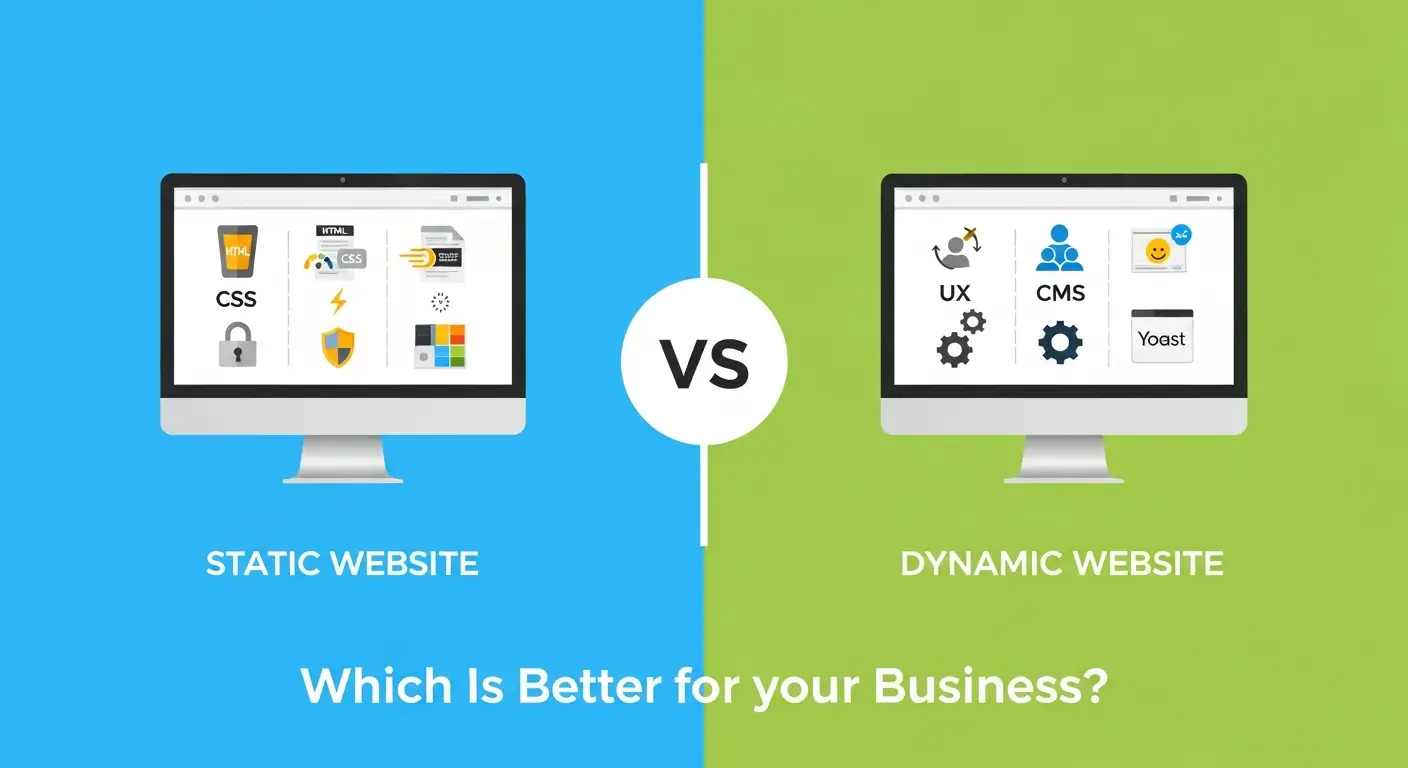
Every business needs a website that supports its goals and helps customers find clear information. A website can be static or dynamic, and each type works in a different way. A static website shows fixed pages that load quickly and stay the same for all visitors. A dynamic website updates content using a database and changes based on user actions. Choosing between them affects cost, speed, and long-term results.
When you understand how each type works, you can decide which one matches your business needs and marketing plan. This article explains both types and helps you choose the right structure for your next business website.
What Is a Static Website?
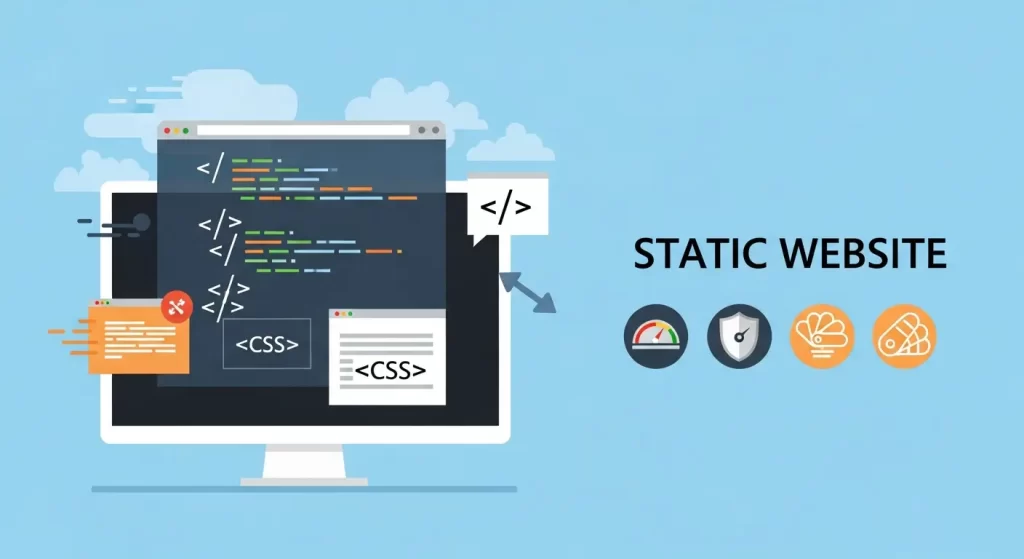
A static website shows the same content to every visitor. Each page is created with HTML, CSS, and sometimes JavaScript. These pages sit on a server and open directly when someone clicks a link. Because the server does not run extra code or connect to a database, static websites load very fast. They are simple to build and easy to host at a low cost.
Static websites work well for small businesses, portfolios, or company profiles that do not change often. Updates require manual edits, which means you need a developer or some coding skills. This type of website is safe, reliable, and great for users who want clear information without interactive features.
What Is a Dynamic Website?
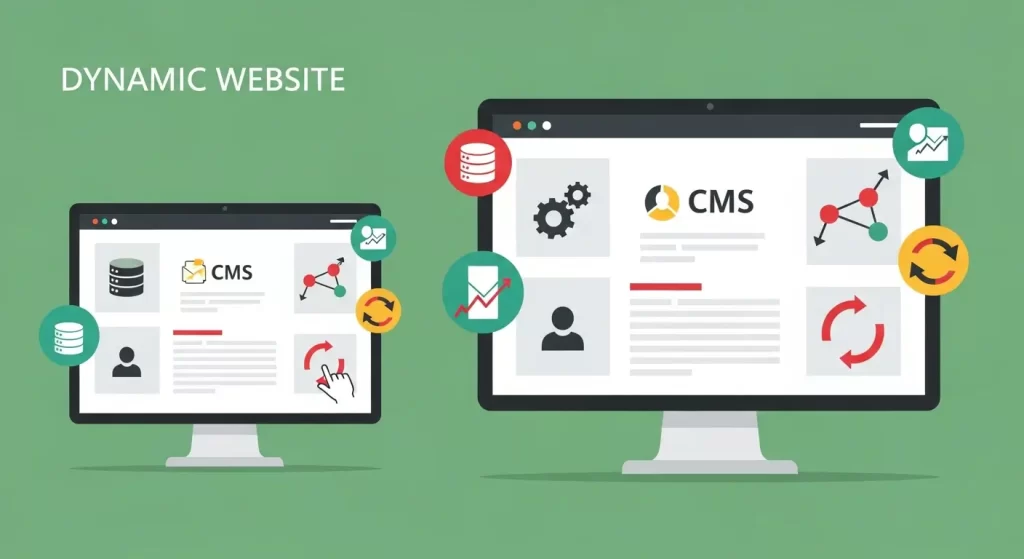
A dynamic website changes content based on user actions or data stored in a database. When someone visits, the server processes a request and builds the page in real time using languages like PHP, Python, or Node.js. This process allows each visitor to see fresh or personalized content.
Dynamic websites work well for online stores, news platforms, and blogs that update often. They use tools like WordPress or other content management systems to make updates easier. Owners can add new products, articles, or pages without editing code.
This type of website is flexible and interactive, but it needs more resources to host and maintain. It suits businesses that want user accounts, comments, or real-time updates.
Static vs Dynamic Websites: Key Differences
| Factor | Static Website | Dynamic Website |
| Content | Fixed HTML/CSS pages | Pages built from database on request |
| Speed | Very fast | Slower than static |
| Updates | Manual edits | CMS-based edits |
| Interactivity | Minimal | High (accounts, carts, comments) |
| Security | Fewer attack points | Needs stronger hardening |
| Scalability | Suits small sites | Suits large, complex sites |
| Cost | Lower build and hosting | Higher build and hosting |
| Typical Use | Portfolio, brochure, landing pages | eCommerce, news, blogs, web apps |
SEO and Performance Considerations
1. Speed and Core Web Vitals
Search engines reward fast websites. Static pages load directly from the server, which improves Core Web Vitals such as Largest Contentful Paint and First Input Delay. Dynamic sites run extra processes before showing content, so optimization with caching, CDN, and database tuning becomes essential.
2. Crawl Efficiency and Indexing
Search bots read static pages easily because their structure is simple. Dynamic pages may use scripts or parameters that confuse crawlers. Adding clean URLs, XML sitemaps, and structured data helps search engines index pages correctly.
3. Content Freshness and SEO Tools
Dynamic websites can refresh content often using a CMS like WordPress or Joomla. This supports SEO plugins, meta tag control, and automatic updates. Static sites need manual changes, so ranking improvements depend on how often new content is deployed.
4. Mobile Optimization
Both website types must adapt to mobile screens. Static designs use lightweight code for fast display. Dynamic sites rely on responsive frameworks that adjust layouts and handle interactive elements smoothly.
5. Security and Stability
Static sites face fewer risks because they do not connect to a database. Dynamic websites require regular security updates, SSL certificates, and backups. Maintaining this protects SEO trust and prevents downtime that harms ranking.
Which Website Type Fits Your Business?
We have built websites for many businesses across different industries, and we see one truth often: the right website depends on how a company grows and communicates with its customers. If your business needs a simple online presence where visitors read about your services or view contact details, a static website will serve you well. It loads quickly, costs less to maintain, and stays stable for years.
When a business grows and wants customer accounts, content updates, or online sales, a dynamic website becomes the better choice. It allows easy updates through a content management system and connects directly with tools for marketing and analytics.
Our team at Okriya helps clients choose what fits their real needs, not just what looks good on paper. We study their goals, plan for future changes, and build a structure that supports long-term growth. If you are unsure which type fits your business, we can guide you step by step and build a solution that works perfectly for your brand. Contact us today and talk to our experts about the best website structure for your business.
Modern Alternatives: Static Site Generators and Hybrid Models
Technology has grown fast, and businesses no longer have to choose only between static or dynamic websites. Tools like Next.js, Gatsby, and Hugo create static sites that can still show live data. These are called Static Site Generators (SSG). They give the speed of static websites and the flexibility of dynamic ones.
Some brands now use a hybrid model known as JAMstack. It connects pre-built pages with APIs that fetch dynamic data when needed. This setup improves speed, security, and scalability while keeping maintenance simple.
At Okriya, we use these modern methods to help businesses get the best mix of performance and features. Our developers plan each project based on your content flow, automation needs, and budget goals. We make sure your website stays fast, secure, and ready for future growth. If you want to explore these new options, talk to our team and see how we can build a smarter solution for your business.
Modern Alternatives: Static Site Generators and Hybrid Models
Modern web technology now combines the best parts of static and dynamic websites. Static Site Generators (SSG) such as Next.js, Hugo, and Gatsby create websites that load fast like static sites but still pull data from external sources. This makes updates simple and reduces server load.
Hybrid models like JAMstack take this further. They separate the front-end from the back-end, using APIs to bring in content or user data only when needed. This method improves speed, security, and scalability. It also helps websites handle higher traffic without slowing down.
Real-World Examples
Our team recently worked with a growing business that needed a faster website to handle increasing visitors. Their old dynamic site loaded slowly and required constant updates. We rebuilt it using a static structure supported by a lightweight content system. The result was a 60% improvement in loading time and a clear rise in customer engagement.
Another client ran an online store that needed flexible product updates and user accounts. We used a dynamic framework connected to a secure database. It allowed their team to manage products easily while keeping performance high.
We do not share company details for privacy reasons, but these cases show how the right structure can change results. Each project starts with understanding real needs and ends with a website that performs better, loads faster, and stays stable under growth.
FAQs
What is the main difference between static and dynamic websites?
Static websites show fixed content stored on the server. Dynamic websites use a database to load fresh or personalized content for each visitor.
Which type of website is better for small businesses?
Small businesses often choose static websites because they are fast, simple, and affordable to maintain.
Do dynamic websites rank better on search engines?
Both can rank well. Static sites have faster speed, while dynamic sites offer more content options. SEO results depend on proper optimization, not only the website type.
Can a static website have interactive elements?
Yes. Static sites can include forms, animations, or external tools through JavaScript, though they remain simpler than full dynamic systems.
Are static websites more secure?
Static sites are safer because they don’t connect to databases or run server-side scripts. Dynamic sites need regular updates and secure coding to prevent attacks.
What is JAMstack, and why is it popular?
JAMstack is a modern web approach that combines static pages with APIs and JavaScript. It gives fast loading, strong security, and easy scalability.